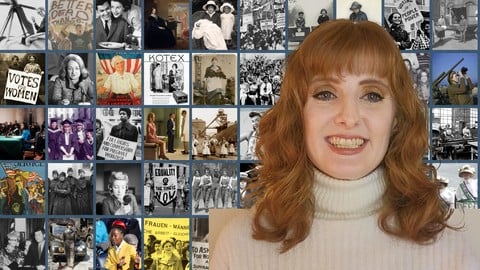
Are you a diversity advocate looking to get a broader picture of how women entered the workforce in the West? Do you need a refresher course to add context to the struggles that women are going through in today’s society and why? Then this course is for you!
Over this course, we’re going to explore how women entered the workforce in the west. Starting with the early roles of women at work, and how the gendered definition of labour changed drastically around the Industrial Revolution. We’ll explore how first-wave feminism began to develop in the West and the suffrage movement for women in general. Then, we’ll look at World War 1 and World War 2 and the different ways women entered the labour force at this time on the homefront, but also on the front lines. We’ll look at the outcomes that war had for women’s rights in the West, including getting women the right to vote in America and the United Kingdom. Then, we’ll look at how women began to enter the workforce in droves during the 1950s all the way up to the 1990s. We’ll explore the early discrimination that women faced at work, exploring topics like the marriage bar, workplace harassment and early discrimination suits. We’ll look at how recently women in the workforce did not have the right to have a baby and continue working, and the different legal battles that changed this for white women and women of colour.
This course is packed with exciting historical facts, real stories from women at different points in history and immersive activities exploring women’s representation in different historical pieces that shows the different rights that women held through time. On every section, you’ll be able to download resources around women’s right and engage with us to develop a broader understanding of women’s representation in the West, but also around the globe.
At the end of this course, you’ll get a Udemy Certificate that you can use in your workplace and share on LinkedIn to show your colleagues that you’re committed to understanding more about the history of women at work so that we can make better decisions to support the next generation of women in leadership.